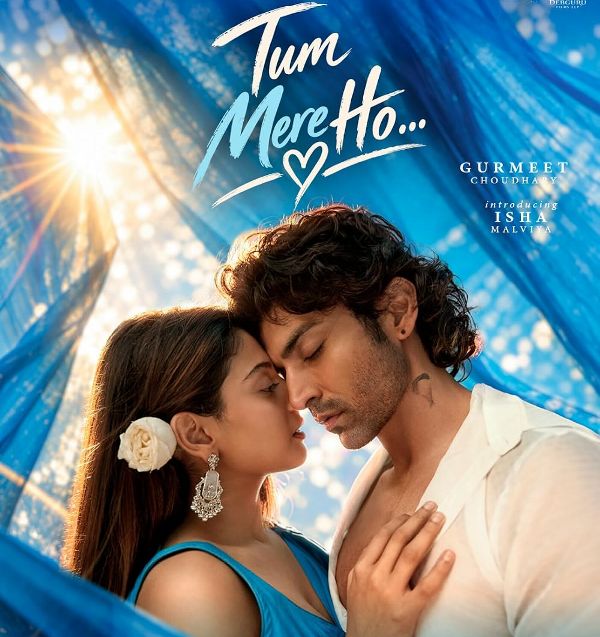
Tum Mere Ho
Fun Facts of Movie
Tum Mere Ho Movie Review: A Snake-Charmer Romance

Tum Mere Ho (1990) is an uneven but distinctive romantic fantasy whose appeal depends on your taste for old-fashioned storytelling. Its snake-charmer premise gives a familiar love story an unusual setting, although the mixture of romance and supernatural danger won’t suit every viewer.
Starring Aamir Khan and Juhi Chawla, this is a Hindi-language film, not a Telugu movie. The folklore-driven premise is its strongest reason to watch, particularly if you’re interested in the leads’ early careers.
The romance provides the emotional center, while the fantasy and horror elements determine how convincingly that love story holds together.
Key Takeaways
- Tum Mere Ho combines romance, fantasy, and horror around a snake-charmer hero, giving its familiar romantic conflict an unusual supernatural setting.
- Aamir Khan plays Shiva, while Juhi Chawla plays Paro. Their pairing is a central attraction for viewers interested in their early films.
- The folklore premise is more distinctive than the basic story of a wealthy father opposing his daughter’s relationship.
- Anand-Milind composed the music, and the supporting cast includes Ajit Vachani and Kalpana Iyer.
- Vintage Hindi cinema fans are its clearest audience. Viewers seeking brisk pacing may find the genre shifts less satisfying.
Tum Mere Ho Movie review: how well does its unusual romance work?
Tum Mere Ho works best when its romance and snake-charmer folklore feel connected. The familiar emotional stakes give the fantasy a clear purpose: Shiva’s unusual ability matters because it affects his relationship with Paro.
The result is watchable on its own old-fashioned terms, but less persuasive as a tightly shaped romantic drama. Its unusual premise creates interest without making every development equally compelling.
A simple love story meets snake-charmer folklore
Shiva can charm snakes and falls in love with Paro. Her wealthy father opposes their match, placing a recognizable social obstacle between the lovers.
The supernatural element changes that conflict. When Shiva rescues Paro from a dangerous snake, his actions help change her father’s view. His gift therefore has a direct role in the romance rather than existing only as background decoration.
That connection is the story’s strongest idea. A quality that makes Shiva unusual also gives him a chance to demonstrate his worth. However, the underlying relationship remains straightforward. Viewers expecting complicated motives or subtle negotiations between the families may find the emotional logic too simple.
Aamir Khan and Juhi Chawla lead the cast
Aamir Khan plays Shiva, and Juhi Chawla plays Paro. Their pairing gives the film an accessible romantic center, even when the surrounding material asks viewers to accept a considerable amount of fantasy.
Khan’s role combines the young romantic lead with a hero defined by an extraordinary skill. Chawla’s Paro is central to both the love story and the conflict over parental approval.
The casting is a stronger attraction than the depth of the characterization. Shiva and Paro are easy to understand, but their relationship offers limited psychological complexity. For fans of the actors, the interest lies in seeing this familiar pairing within a stranger genre framework.
The performances, music, and genre mix that shape the film
Romance supplies the emotional stakes, fantasy establishes the story’s rules, and horror adds danger. Those elements belong together in principle. In practice, the film’s changes in tone make the viewing experience less consistent than its central idea suggests.
What the supporting cast and Anand-Milind music add
The supporting cast includes Ajit Vachani, Sudhir Pandey, Kalpana Iyer, and Raj Zutshi. Their characters widen the story beyond the central couple and connect its social conflict with its supernatural world.
Iyer’s credited role as Mother Snake is particularly revealing about the film’s approach. Snake folklore is part of the dramatic machinery, rather than a passing visual motif. That makes the supporting characters important to the film’s identity, even when the romance remains the main attraction.
Anand-Milind composed the music. The musical component fits the film’s commitment to an openly emotional romantic style. However, the soundtrack credit alone isn’t a reason to place this alongside the duo’s most celebrated work. The stronger recommendation remains the film’s unusual premise and lead pairing.
What still works, and what may feel dated
The most appealing feature is the direct connection between Shiva’s snake-charming ability and his romantic prospects. The fantasy affects how other characters judge him, so it has consequences beyond spectacle.
The less satisfying feature is the movement between emotional registers. Romantic sincerity, family opposition, and supernatural danger ask for different responses. When those shifts feel abrupt, the story loses momentum.
Its pacing also feels more comfortable with extended emotional development than a quick progression of events. Some viewers will enjoy that patience; others will find the central conflict overstretched.
The dated presentation is best understood as a question of taste. Viewers who enjoy overt melodrama may accept it readily. Those looking for restrained performances or sustained horror tension will have a harder time settling into its rhythm.
Who should watch Tum Mere Ho today?
Fans exploring Aamir Khan’s early career have the clearest reason to watch. Shiva offers a different kind of role from the grounded protagonists associated with some of his later films. The supernatural premise makes this an interesting stop in that wider filmography, even if it isn’t an obvious starting point.
For a contrast, our Dangal movie review looks at Khan in a later sports drama built around family expectations and wrestling. The comparison is useful because Tum Mere Ho asks for a different relationship with realism.
Juhi Chawla fans may also appreciate seeing her opposite Khan in a story that places their romantic pairing inside a folklore-based fantasy. The attraction is the combination of recognizable stars and less familiar material. However, viewers seeking a richly developed role for Paro should keep their expectations measured.
Vintage Hindi cinema enthusiasts are another natural audience. The film favors clear emotional positions and a direct struggle over whether the lovers can be together. Its sincerity is easier to appreciate if you enjoy that style already.
The snake-charmer premise is the main reason to choose this film, but the romance determines whether you’ll stay invested.
That distinction matters for horror viewers. The presence of supernatural danger doesn’t make this a dependable choice for someone seeking sustained fear. Likewise, the romantic story doesn’t unfold with the economy expected of a brisk modern romance.
The practical recommendation is selective: watch it for the stars, the period style, or the unusual premise. If none of those interests you, the uneven pacing probably won’t change your mind.
Frequently Asked Questions
When was Tum Mere Ho released?
Tum Mere Ho was released on May 25, 1990, according to the Times of India film listing. The year is useful when searching for it, because the title alone can bring up unrelated material. The film discussed here is the 1990 Aamir Khan and Juhi Chawla release.
Who directed Tum Mere Ho?
Tahir Hussain directed Tum Mere Ho. His name helps distinguish this production when browsing film catalogs or credits. The film combines a straightforward romantic conflict with snake-charmer folklore, and that combination is more useful for identifying it than relying on the title alone.
Is Tum Mere Ho a Telugu film?
No. The 1990 film starring Aamir Khan as Shiva and Juhi Chawla as Paro is identified as Hindi-language. A search result or website category doesn’t change that original-language identification. Similarly titled films should be treated as separate productions rather than assumed to be alternate versions of this one.
Who are some of the film’s supporting cast members?
The supporting cast includes Ajit Vachani, Sudhir Pandey, Kalpana Iyer, and Raj Zutshi. Iyer is credited as Mother Snake, while Zutshi plays Damru. These credits also help identify the correct film when a catalog entry provides little information beyond the title and the two lead actors.
How did audiences rate the film?
As of October 2026, Rotten Tomatoes lists a 38% audience score from 250+ ratings and no critic reviews. Plex separately reports a 3.8/10 audience rating. Both scores reflect responses from their respective platform users. Neither establishes a professional critical consensus, and the two figures shouldn’t be combined because they use different scales and voter groups.
Conclusion: A Selective Pick for Vintage Film Fans
Tum Mere Ho earns interest through its snake-charmer premise and the pairing of Aamir Khan and Juhi Chawla. Its old-fashioned blend of romance, fantasy, and horror gives it a recognizable identity, even when the storytelling feels uneven.
The strongest reason to watch is curiosity about its particular combination of stars and folklore. Viewers comfortable with broad emotions and a slower romantic rhythm are more likely to enjoy it than those seeking polished horror or tightly paced drama.
It’s a selective recommendation for vintage Hindi cinema fans, with a more unusual premise than its familiar love story initially suggests.