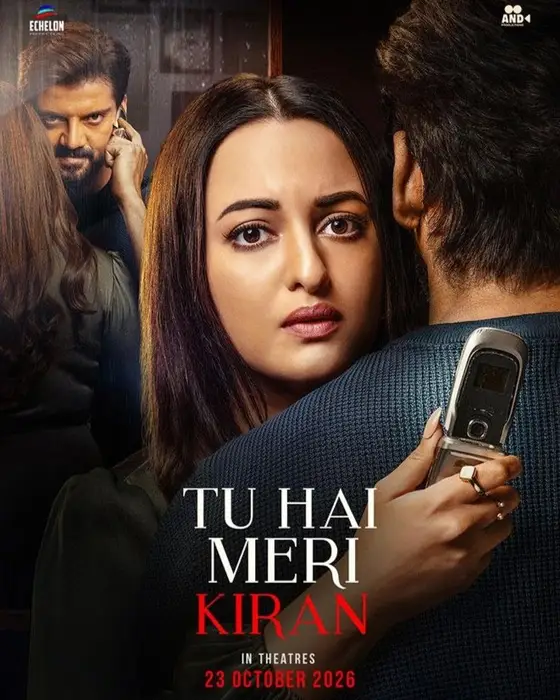
Tu Hai Meri Kiran
Fun Facts of Movie
Tu Hai Meri Kiran Movie Review: What Is Known

Tu Hai Meri Kiran is Karan Rawal’s 2026 Hindi romantic thriller, starring Sonakshi Sinha and Zaheer Iqbal. Its strongest hook is a mysterious phone connection that draws a bestselling author into a relationship where affection becomes control.
For anyone seeking a Tu Hai Meri Kiran movie review, one distinction matters: the established information covers the premise, credits, and release plans, but doesn’t support a reliable finished-film verdict. The official trailer establishes the promotional setup, not proof that the performances, suspense, or ending deliver.
With a limited theatrical release announced for October 23, 2026, the film has a clear audience proposition: romantic intrigue with obsession and personal autonomy at its center.
Key Takeaways
- Sonakshi Sinha plays bestselling author Kiran, whose mysterious connection with Samar introduces romance, uncertainty, and the threat of obsessive behavior.
- Karan Rawal directs and receives writing credits; Zaheer Iqbal plays Samar, the man whose affection crosses into control.
- BookMyShow lists a runtime of 2 hours and 5 minutes, although other published runtime listings differ.
- The announced limited theatrical release is October 23, 2026; no streaming platform is confirmed.
- The premise offers a recognizable romantic-thriller hook, but a substantiated assessment of the finished film’s execution remains unavailable.
Tu Hai Meri Kiran Movie Review: What Works and What Falls Short
The clearest attraction is the combination of an intimate connection and an unexplained device. Kiran’s relationship with Samar creates two questions: who is this person, and how much should she trust him?
However, those questions establish potential rather than quality. A romantic thriller needs believable attachment before its danger can carry emotional weight.
How the film builds its romantic-thriller story
Kiran is a bestselling author who connects with Samar through a mysterious phone. His feelings become increasingly obsessive, and the promotional description places his behavior beyond affection, in the territory of control.
That setup gives the film two sources of uncertainty. The phone creates an external mystery, while Samar’s changing behavior creates a more personal threat. Even without revealing plot turns, the distinction matters: explaining the device wouldn’t automatically resolve the relationship.
The strongest element on paper is that overlap between curiosity and intimacy. The familiar element is the obsessive-lover framework, which needs more than escalating threats to feel fresh.
Hindi cinema has repeatedly explored destructive attachment. Readers interested in that broader conversation can also find it in the Tere Ishk Mein review. The shared theme doesn’t establish that these films reach the same conclusions about love.
Sonakshi Sinha and Zaheer Iqbal’s performances
Sinha plays Kiran, while Iqbal plays Samar. Their roles carry different dramatic demands: Kiran’s changing understanding must make emotional sense, and Samar’s possessiveness needs a credible relationship context.
For Sinha’s character, agency is an important consideration. A bestselling author has an established identity beyond the romance, so her decisions matter as much as the danger surrounding her.
Meanwhile, Samar’s shift toward control raises a separate acting challenge. Charm and menace need a convincing connection rather than an abrupt personality switch.
These are demands built into the roles, not verified achievements of the performances. Neither the casting announcement nor promotional footage supports declaring one actor the film’s standout.
Does Tu Hai Meri Kiran deliver on suspense, pacing, and craft?
The premise supports suspense, but the finished film’s handling of it remains an open question. There isn’t enough established post-release criticism to support concrete claims about scenes, editing choices, or the effectiveness of its final reveal.
Pacing, suspense, and the twists
BookMyShow lists the film at 2 hours and 5 minutes. However, other published listings give different runtimes, so 125 minutes shouldn’t be treated as an uncontested running time.
More importantly, runtime alone says little about momentum. A relationship thriller needs space for attachment to develop, but repeated warnings can stall the story once the threat becomes clear.
The phone mystery adds another demand. Information about the connection must change the characters’ understanding rather than merely delay an explanation. Otherwise, uncertainty can become frustrating instead of tense.
The difference between surprise and suspense also matters here. A surprise changes what the audience knows at one moment; suspense sustains concern about what could happen next.
There is no supported basis for claiming that Tu Hai Meri Kiran balances those elements successfully, or that its ending pays them off. A confident verdict would require evidence beyond its synopsis and marketing.
Music, visuals, and the film’s mood
A romantic thriller asks its soundtrack and visual style to support competing feelings. Attraction needs room to register, while unease must remain perceptible without revealing every threat too early.
However, trailer music, compressed editing, and selected images don’t establish the rhythm of a full feature. They also can’t show whether songs interrupt tension or whether production design contributes meaningful character detail.
The title needs clarification, too. This 2026 feature is separate from the well-known song with the same title associated with Darr (1993). That association shouldn’t become a shortcut for describing the new film’s music or story.
No substantiated assessment of the score, cinematography, or theatrical sound presentation is established here. Accordingly, none deserves unsupported praise or criticism.
Should you watch Tu Hai Meri Kiran in theaters?
The film’s announced limited theatrical release date is October 23, 2026. Cinema Express’s release announcement identifies Rawal as writer-director and confirms the October 23 theatrical plan.
For viewers in the United States, a limited release doesn’t imply nationwide availability. It also doesn’t establish that every market shares the same opening schedule. The release announcement supports a theatrical launch, not a blanket promise of access.
The premise is most likely to interest viewers who enjoy relationship-driven mysteries. Its appeal rests on an intimate bond becoming threatening, rather than a straightforward investigation with an immediately defined antagonist.
Sinha and Iqbal are another clear reason for interest. However, liking the lead actors is different from knowing whether their chemistry sustains this particular story. Casting can justify curiosity without guaranteeing satisfaction.
Viewers seeking a light romance should approach the premise differently. Obsession and controlling behavior are central to the description, so the romantic label doesn’t promise a comforting love story.
Similarly, anyone prioritizing airtight plotting or a proven twist payoff lacks enough finished-film evidence for a confident recommendation. The mystery device is intriguing, but originality of setup and quality of resolution are separate considerations.
There is also no established basis for calling this essential big-screen viewing. A theatrical release doesn’t automatically mean that scale, sound, or visual detail adds enough value to make the venue decisive.
The practical recommendation is therefore interest-led rather than verdict-led. Choose it because the cast and premise appeal to you, not because an unsupported review promises exceptional suspense.
No confirmed streaming platform or OTT release date is established. That uncertainty shouldn’t turn into an assumed Netflix, Prime Video, or other service announcement. Likewise, an individual early response shouldn’t be presented as an audience consensus or consolidated critic score.
Frequently Asked Questions
Who directed Tu Hai Meri Kiran?
Karan Rawal directed the film and is credited with its story, screenplay, and dialogue. Those credits place the central writing and directing responsibilities with him, rather than identifying him only as the director. They don’t, by themselves, establish how successfully the finished story comes together.
Who stars in Tu Hai Meri Kiran?
Sonakshi Sinha plays Kiran, and Zaheer Iqbal plays Samar. The IMDb cast listing identifies both actors among the film’s leads. Their characters form the central relationship described in the synopsis, although a cast listing doesn’t provide evidence for judging their chemistry or individual performances.
What is Tu Hai Meri Kiran about?
The spoiler-free premise follows Kiran, a bestselling author who connects with Samar through a mysterious phone. His increasingly obsessive feelings turn that connection into a threat. The story’s advertised tension concerns the boundary between affection and control, alongside the unanswered question surrounding their unusual means of contact.
How long is Tu Hai Meri Kiran?
BookMyShow lists the runtime as 2 hours and 5 minutes, although published listings differ. BookMyShow also lists a UA16+ classification. That is an attributed listing rather than a universal age classification, and it shouldn’t be presented as a US rating or assumed to apply in every market.
When and where can viewers watch Tu Hai Meri Kiran?
The announced limited theatrical release date is October 23, 2026. That release plan doesn’t establish nationwide US availability, and no confirmed streaming platform or OTT date is established in the current information. The supported viewing announcement is theatrical, without a verified subscription-service option to name.
Conclusion: An Intriguing Setup, With the Verdict Still Open
Tu Hai Meri Kiran has a clear attraction for romantic-thriller fans: a mysterious connection that brings emotional intimacy and personal danger into the same relationship. Its familiar obsessive-love framework, however, leaves the writing and character development with substantial work to do.
The cast and premise justify interest, but they don’t establish the finished film’s strongest performance, biggest execution flaw, or success as a suspense story. Any firm recommendation on those points would go beyond what is known.
For now, viewers drawn to Sinha, Iqbal, and relationship-centered mysteries have the clearest reason to consider it. The fairest position is curiosity without a manufactured verdict, with no invented rating or claim that promotional promise equals a successful film.