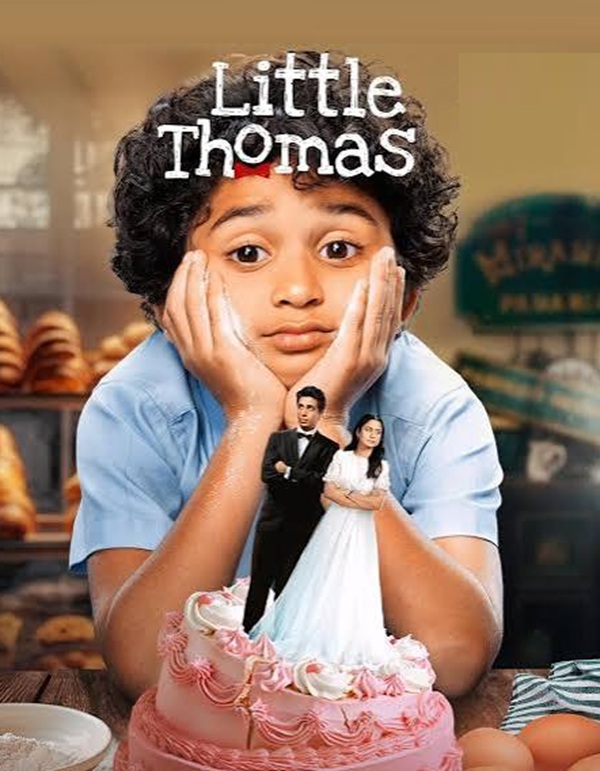
Little Thomas
Fun Facts of Movie
Little Thomas Movie Review: Childhood Meets Family Strain
To seven-year-old Thomas, a younger brother seems like the answer to a home unsettled by arguments and pressures he doesn’t yet understand. Little Thomas finds its charm in the distance between that hopeful idea and the adult worries surrounding it, although the gentle storytelling sometimes loses momentum.
Written and directed by Kaushal Oza, this Hindi-language film stars Gulshan Devaiah, Rasika Dugal, and Hridansh Parekh as a family in early-1990s Goa. Its strongest quality is perspective: the parents’ problems matter, but a child’s incomplete understanding gives them a different shape.
That balance makes the performances worth considering alongside the humor, the bittersweet mood, and the patience this intimate family drama asks of its audience.
Key Takeaways
- Seven-year-old Thomas wants a younger brother, and his efforts to bring his parents closer drive the story.
- Gulshan Devaiah, Rasika Dugal, and Hridansh Parekh give the film its central family dynamic and emotional appeal.
- The humor grows out of childhood misunderstandings, while financial pressure and marital strain give the story a bittersweet edge.
- Its unhurried pace suits patient viewers, although repetition and sentiment may weaken the experience for others.
- Expect an intimate family comedy-drama rather than a fast-moving children’s adventure or a broad, joke-heavy comedy.
Little Thomas Movie review: a tender story with a bittersweet side
Thomas lives with his parents, Desmond and Jessie Miranda, whose troubled relationship overlaps with financial difficulties at the family bakery. He wants a younger brother, but his understanding of how that might happen leaves plenty of room for confusion.
The setup gives Oza a useful double perspective. Thomas sees a problem he can solve; adults recognize complications beyond his reach.
How Thomas’s childlike plan drives the story
Thomas comes to believe that his parents kissing will help produce the brother he wants. His attempts to bring them closer supply the film’s comic engine, but the misunderstanding also gives the story an emotional purpose.
A child can notice unhappiness without understanding its causes. Thomas’s plan captures that gap: he approaches an adult relationship with the confidence of someone who hasn’t learned how difficult reconciliation can be.
The humor therefore depends on earnestness rather than knowing jokes. His objective makes sense to him, even when the audience understands its limits. Oza’s challenge is maintaining that innocence without making it feel overly arranged, a tonal concern he discusses in his interview with The Hindu.
What Gulshan Devaiah, Rasika Dugal, and Hridansh Parekh bring to the film
Parekh’s spirited performance gives Thomas’s pursuit energy. The character needs conviction because the premise depends on believing that this particular solution could occupy a child’s attention so completely.
Devaiah and Dugal carry the other side of the story: parents whose worries don’t disappear because their son wants something. Their portrayal of a strained marriage prevents the family setup from becoming purely decorative.
The contrast between the adults’ friction and Thomas’s determination supplies the central dynamic. Still, the dialogue can affect how natural that dynamic feels. The Indian Express criticized the children’s exchanges as overly rehearsed, a useful qualification to the praise for Parekh.
An appealing young lead can hold attention, but dialogue that sounds too prepared can weaken the spontaneity the role needs.
What works, and what may not work for every viewer
The film’s warmth is its clearest attraction, but warmth alone doesn’t settle the question of pacing. A modest premise needs enough variation to sustain a feature-length story.
That tension helps explain the differing responses: the same patience that gives the family room can also make the narrative feel repetitive.
The film’s strongest themes and mood
Childhood innocence gives Little Thomas its humor, while family strain gives that humor weight. Thomas’s wish is simple; the circumstances around it aren’t. The bakery’s financial trouble also gives his parents concerns beyond their disagreements with each other.
The early-1990s Goa setting establishes a particular time and place for this household. It supports the mood without requiring viewers to treat the film as a comprehensive portrait of Goan life.
The Knockturnal’s review emphasizes the film’s family feeling and humor. However, its tenderness works best when the adult difficulties remain present. If cuteness takes over, the contrast between Thomas’s hopes and his parents’ worries loses some force.
Thomas’s misunderstanding gives the humor its shape, but the parents’ unresolved worries give that humor its emotional weight.
Who is most likely to enjoy Little Thomas?
Patient viewers who enjoy gentle family dramas are the clearest audience. The film also suits people interested in how children interpret behavior that adults struggle to explain.
Viewers drawn to Bommarillu’s family tensions may appreciate another story concerned with affection and misunderstanding, although the protagonists and dramatic situations are very different.
Expectations matter. Someone seeking rapid developments or broad comedy may find the central idea stretched too thin. Scroll’s review flags repetition and length, while Cinema Express describes the pace as consciously unhurried.
Those responses identify a genuine dividing line. Some viewers will value the time spent with the family; others will want the story to move beyond its initial misunderstanding sooner. Neither response depends on missing the film’s intentions.
Final verdict: is Little Thomas worth watching?
Little Thomas earns a qualified recommendation, especially for viewers who value a child’s perspective and an intimate family setting over brisk plotting. Its premise has an immediate emotional pull: Thomas wants something ordinary, yet pursuing it brings him up against difficulties he cannot fully understand.
The performances are the strongest reason to stay interested. Parekh supplies the child’s conviction, while Devaiah and Dugal give the family situation an adult counterweight. The story needs both sides. Without Thomas, the domestic strain would lose its distinctive angle; without the parents’ problems, his plan would risk becoming a prolonged comic device.
The reservation concerns how much dramatic movement the premise can support. Gentle pacing can make room for feeling, but repetition doesn’t automatically produce greater depth. Viewers who need each sequence to change the situation may feel the film’s length more sharply than those content to remain with its characters.
Its appeal therefore depends less on the novelty of a child misunderstanding adulthood than on your willingness to follow that misunderstanding at length. The setup is accessible, but the tone asks for an audience comfortable with modest stakes, uncomfortable family feelings, and humor that doesn’t always seek a big laugh.
For a family-drama audience, that’s a reasonable exchange. For someone choosing a film mainly for momentum, the recommendation is less enthusiastic.
The fairest expectation is a tender, occasionally overextended comedy-drama whose emotional interest comes from the distance between what Thomas wants and what his parents can give. That distance is more compelling than the sibling wish alone.
Frequently Asked Questions
Who directed Little Thomas?
Kaushal Oza wrote and directed the Hindi-language film. Having the same writer and director gives the project a consistent creative point of view, centered on Thomas’s understanding of family life. The film is Oza’s feature directorial debut.
Who stars in Little Thomas?
Hridansh Parekh plays Thomas, with Gulshan Devaiah and Rasika Dugal playing his parents, Desmond and Jessie. The supporting cast includes Ashok Sen. The three leads form the central household around which the film’s comedy and family conflict develop.
What is Little Thomas about?
Seven-year-old Thomas wants a younger brother and tries to bring his arguing parents closer. His limited understanding of relationships shapes his plan. Meanwhile, the adults face marital tension and financial trouble at the family bakery, problems that complicate his apparently simple wish.
Is Little Thomas a comedy or a drama?
It blends comedy, drama, and family storytelling. Much of the humor comes from the difference between Thomas’s understanding and what adults recognize about his parents’ situation. The domestic worries give it a bittersweet tone rather than the feel of an uninterrupted children’s comedy.
How long is Little Thomas?
Published listings put the runtime at approximately two hours and five to seven minutes. The New York Indian Film Festival program lists 125 minutes, while other listings report 127 minutes. Those slightly different figures don’t support treating either runtime as universally definitive.
Where can viewers watch Little Thomas?
The announced Indian theatrical release date is October 23, 2026. That announcement doesn’t establish a US theatrical run or US digital access. US viewing availability remains unconfirmed, and the film’s earlier festival screenings don’t establish an ongoing way to watch it.
Conclusion: A family story for patient viewers
Little Thomas is most appealing when its child’s hopeful reasoning meets adult problems that resist easy solutions. Parekh’s conviction and the parental pairing of Devaiah and Dugal give that contrast a human center.
The film’s tenderness will matter more to some viewers than its uneven momentum. Others may find that the premise repeats itself before the emotional rewards fully arrive.
For audiences who enjoy gentle, bittersweet family dramas, it offers a clear reason to watch: a young boy’s understandable wish becomes a revealing way to look at the household around him. Go in for that perspective, with room for an unhurried story, rather than expecting a brisk comedy.