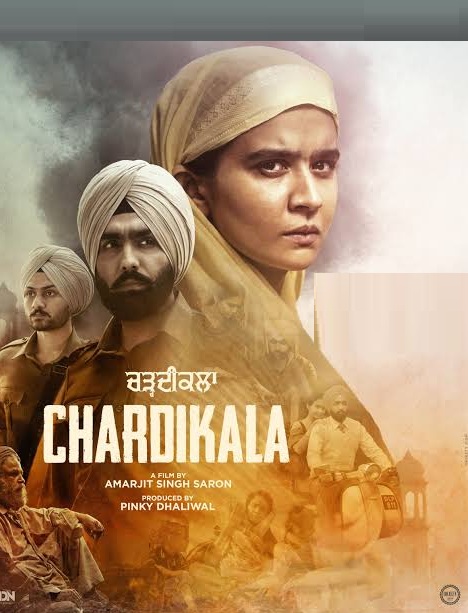
Chardikala
Fun Facts of Movie
Chardikala Movie Review: A Mother’s Rise Through 1984
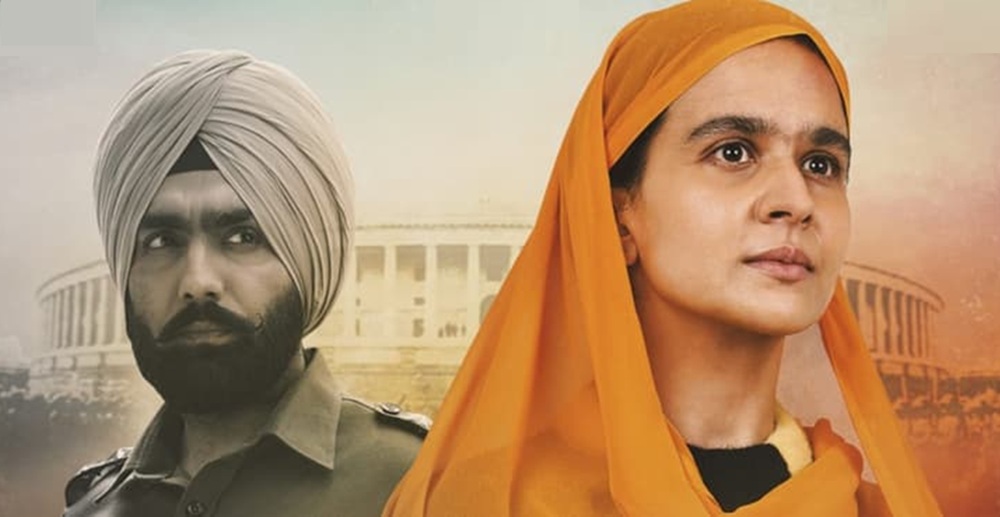
Some historical films ask you to remember events. Chardikala asks you to feel what those events did to one family. This 2026 Punjabi biographical drama follows Bibi Bimal Kaur Khalsa, a nurse and mother caught in the fallout of Indira Gandhi’s assassination.
The film moves from personal suffering to political courage, with Roopi Gill carrying much of its emotional weight. Its serious tone, long runtime, and painful subject matter won’t suit every viewer, but the story has enough human detail to make it more than a standard political drama. This review looks at the story, performances, direction, visual style, controversy, and audience appeal.
What Is Chardikala About?
Directed by Amarjit Singh Saron, Chardikala is a Punjabi-language biographical drama with a 150-minute runtime. It opened in theaters on May 29, 2026, after its appearance at the 2026 Cannes Marché du Film. The film draws from the life of Bibi Bimal Kaur Khalsa, who was born Bimla Devi and worked as a nurse before her life changed after the assassination of Prime Minister Indira Gandhi on October 31, 1984.
Bimal Kaur was married to Beant Singh, one of the two assassins. Although she wasn’t responsible for the crime, the connection placed her under suspicion. The story follows her arrest, harsh questioning, and rejection by people around her. She loses the ordinary life she knew and eventually finds refuge with her in-laws in rural Punjab.
The movie’s real-life foundation gives it a different weight from a fictional political thriller. A detailed background on Bimal Kaur’s story helps explain the historical basis behind the screenplay, although the film focuses more on her personal journey than on presenting a complete account of Punjab’s history.
A Personal Story Set During Punjab’s Troubled 1984 Era
The 1984 setting shapes every part of Bimal Kaur’s life. Fear enters the home, trust breaks down, and even family relationships become difficult. The film shows how suspicion can punish people who weren’t responsible for the original act.
Bimal Kaur’s children also live with the consequences. They face social pressure alongside their mother, while the family struggles to understand why a private tragedy has become a public accusation. That domestic focus keeps the period setting close to the characters instead of turning it into a history lecture.
At the same time, the story touches a much wider wound. Operation Blue Star, the assassination, and the violence that followed left lasting scars across Punjab. Chardikala uses that background to explain the fear surrounding Bimal Kaur, but it keeps the camera trained on her daily experience.
The result is a film about political violence seen through a nurse’s home, a mother’s anxiety, and a village community. That approach gives the historical material an intimate scale.
From Ostracized Mother to Democratic Leader
Bimal Kaur’s character arc gives the movie its central movement. She begins as a mother pushed away by society. Later, she starts helping widows, orphans, and families affected by the events of 1984. Service becomes her way to survive grief and rebuild trust.
Her public work gradually leads her toward grassroots leadership and electoral politics. She eventually enters Parliament, taking the concerns of marginalized people into public life. The shift doesn’t erase her pain. Instead, it shows how she turns private suffering into democratic action.
Readers who want to avoid major plot developments should stop here, because the film follows her political rise in detail. The important point is the path itself. Bimal Kaur doesn’t become a leader because the story gives her an easy victory. She earns public trust after losing nearly everything that once gave her security.
Chardikala Performances: Roopi Gill Leads a Strong Cast
Roopi Gill has the film’s most demanding role, and her performance gives Bimal Kaur a human face. The character could have become a symbol without enough personal detail. Gill avoids that problem by focusing on fear, grief, restraint, and gradual confidence.
Her strongest work appears in moments when Bimal Kaur says little. A tense expression during questioning can reveal more than a long speech. Her guarded posture shows how unsafe she feels, while later changes in her body language suggest a woman learning to speak in public again.
Ammy Virk, Himmat Sandhu, Jarnail Singh, Naiqra Dhillon, and Aks Mehraj add support without pulling attention away from the central story. Their presence helps the film move between family life, village relationships, and political activity. The ensemble generally fits the film’s rural and serious tone.
For viewers who enjoy Indian biographical cinema, Chardikala belongs beside films such as the biographical drama Dangal, though the two movies have very different subjects and emotional registers. Both depend on a central character whose private life becomes part of a larger public story.
Roopi Gill’s Emotional and Controlled Performance
Gill’s approach is controlled rather than theatrical. She doesn’t play Bimal Kaur as fearless from the beginning. Instead, the character appears frightened, isolated, and unsure of what each new accusation may bring.
Scenes involving family loss and public shame benefit from that restraint. Gill’s facial expressions carry the conflict between a mother’s need to protect her children and her own exhaustion. Her body language changes as the story advances, but the performance never suggests that pain disappears.
The interrogation scenes also gain force from what Gill holds back. Bimal Kaur is under pressure, yet the performance avoids turning every exchange into a dramatic outburst. That choice makes her vulnerability believable.
Later, when she moves toward public leadership, Gill adds firmness without making her seem like a different person. The same woman remains present beneath the political confidence. Her courage grows from experience, not from a sudden personality change.
That detail matters because Bimal Kaur is more than a historical figure in the film. Gill shows her as a mother, a worker, a woman carrying shame imposed by others, and a citizen who refuses to stay silent.
How Ammy Virk and the Supporting Cast Add Weight
The supporting cast creates the emotional balance the movie needs. Ammy Virk brings familiar screen presence, while Himmat Sandhu, Jarnail Singh, Naiqra Dhillon, and Aks Mehraj help fill out the film’s social world.
Their performances work best when they respond to Bimal Kaur rather than compete with her. Family members and community figures must show fear, doubt, sympathy, and changing trust. The cast gives those relationships enough texture to keep the political story connected to ordinary people.
The ensemble also helps the film avoid feeling like a one-person speech. Bimal Kaur’s choices affect others, and the supporting performances make that effect visible. Although the lead remains the clear focus, the surrounding characters make her journey feel shared.
Story, Direction, and Visual Style in the Movie Review
Amarjit Singh Saron treats the material as a serious human drama instead of a formulaic Punjabi comedy. That decision fits the story. The film has little interest in easy jokes or commercial detours, and its focus stays on injustice, family pressure, and public judgment.
The screenplay balances two tracks. One follows Bimal Kaur’s private suffering, while the other follows the political events that shape her future. When those tracks meet, the story feels strongest. Her political rise matters because viewers have already seen what she lost.
At 150 minutes, the film has room to show her transformation. However, the runtime may feel heavy during sections that repeat her isolation or restate the political message. The story needs patience, especially during its early period of fear and rejection.
Its greatest strength is the connection between personal drama and public history. Chardikala doesn’t treat leadership as a reward that arrives out of nowhere. It presents political courage as a long response to humiliation, grief, and community need.
Amarjit Singh Saron’s Serious and Human Approach
Saron keeps the direction close to Bimal Kaur’s lived experience. The film doesn’t reduce her to a political slogan, even when its message becomes direct. Her home life, motherhood, and social rejection remain important after she enters public life.
The pacing builds through emotional pressure rather than constant action. Early scenes create a sense of confinement, while the move to rural Punjab gives the character space to recover and reconnect with people. Later transitions into public life widen the film’s scale without abandoning its personal focus.
That structure also creates a risk. Some speeches and political moments may feel too plainly written for viewers who prefer subtle storytelling. The film wants its position to be understood, and it sometimes states the message instead of letting every scene carry it alone.
Still, the approach works because Bimal Kaur’s character remains at the center. Saron gives the history a face and a family, which makes the injustice easier to understand.
Cinematography, Music, and Rural Punjab
Ravi Kumar Sana’s cinematography supports the period setting through its attention to homes, village spaces, and public gatherings. Rural Punjab feels like a place where people watch one another closely. That setting suits a story about gossip, ostracism, and slowly rebuilt trust.
Production design and costumes also help separate Bimal Kaur’s earlier urban life from her later rural surroundings. The contrast is clear without becoming distracting. Editing by Rohit Diiman keeps the story moving across its different phases, although the long runtime remains noticeable.
Music from Rikki Khan, Aftab, Jony, Edward Nemelec, and Arvind adds emotional support rather than overpowering the drama. The background score helps underline grief and public tension, while the rural soundscape gives quieter scenes room to breathe.
These elements create a believable setting for a story that depends on mood. The film needs viewers to feel the weight of a home under suspicion and the pressure of a community deciding whether to accept someone again.
Themes, Controversy, and Final Chardikala Verdict
Survival is the film’s main theme, but Chardikala defines survival through action. Bimal Kaur doesn’t recover by forgetting the past. She helps people who have suffered similar losses, then takes that work into public life.
Motherhood also shapes the story. Her children are not a side detail. They give her decisions emotional stakes and show how social judgment spreads through a family. The movie asks what dignity looks like when a person has no control over the accusations surrounding her.
The film has also drawn debate over its dramatic portrayal of Sikh shaheeds and the reported directive from the Akal Takht. Those concerns involve religious representation and the limits of dramatizing painful history. They deserve discussion on their own terms, but controversy doesn’t automatically prove that the movie succeeds or fails.
Public reaction has been strongly tied to identity, memory, and Sikh history, as seen in a public reaction to the film. Viewers should separate that emotional response from an assessment of the screenplay, performances, and filmmaking.
What Works Best and What May Not Work for Everyone
Roopi Gill’s lead performance is the clearest strength. She gives Bimal Kaur fear without weakness and courage without exaggeration. The emotional depth also helps the film avoid treating history as a collection of dates.
The rural world feels grounded, while the story’s willingness to confront state suspicion and social rejection gives it purpose. Its political material grows from the character’s experience, so the film rarely feels detached from the people affected by events.
Still, the 150-minute runtime requires commitment. The subject is heavy, and some viewers may find the direct political messaging too intense. Those looking for light entertainment, broad comedy, or a fast commercial plot may struggle with its pace.
Who Should Watch Chardikala?
Chardikala suits viewers who enjoy serious Punjabi cinema, historical dramas, biographical stories, and socially focused films. It also fits audiences who prefer character development over familiar commercial formulas.
The reported 3.5 out of 5 rating offers useful context, but it isn’t a universal measure. My assessment is similar in spirit: the film has clear strengths, though its length and serious tone limit its appeal.
Conclusion
Chardikala stands out because Roopi Gill makes Bibi Bimal Kaur feel like a person before she becomes a historical symbol. The film treats a painful period in Punjab’s history through family loss, social rejection, and the slow growth of public courage.
Its runtime and political weight won’t work for everyone. However, viewers looking for thoughtful Punjabi cinema with emotional purpose will likely find Chardikala worthwhile.