
Dangal
Fun Facts of Movie
Dangal: Why This Wrestling Drama Still Hits Hard in 2026
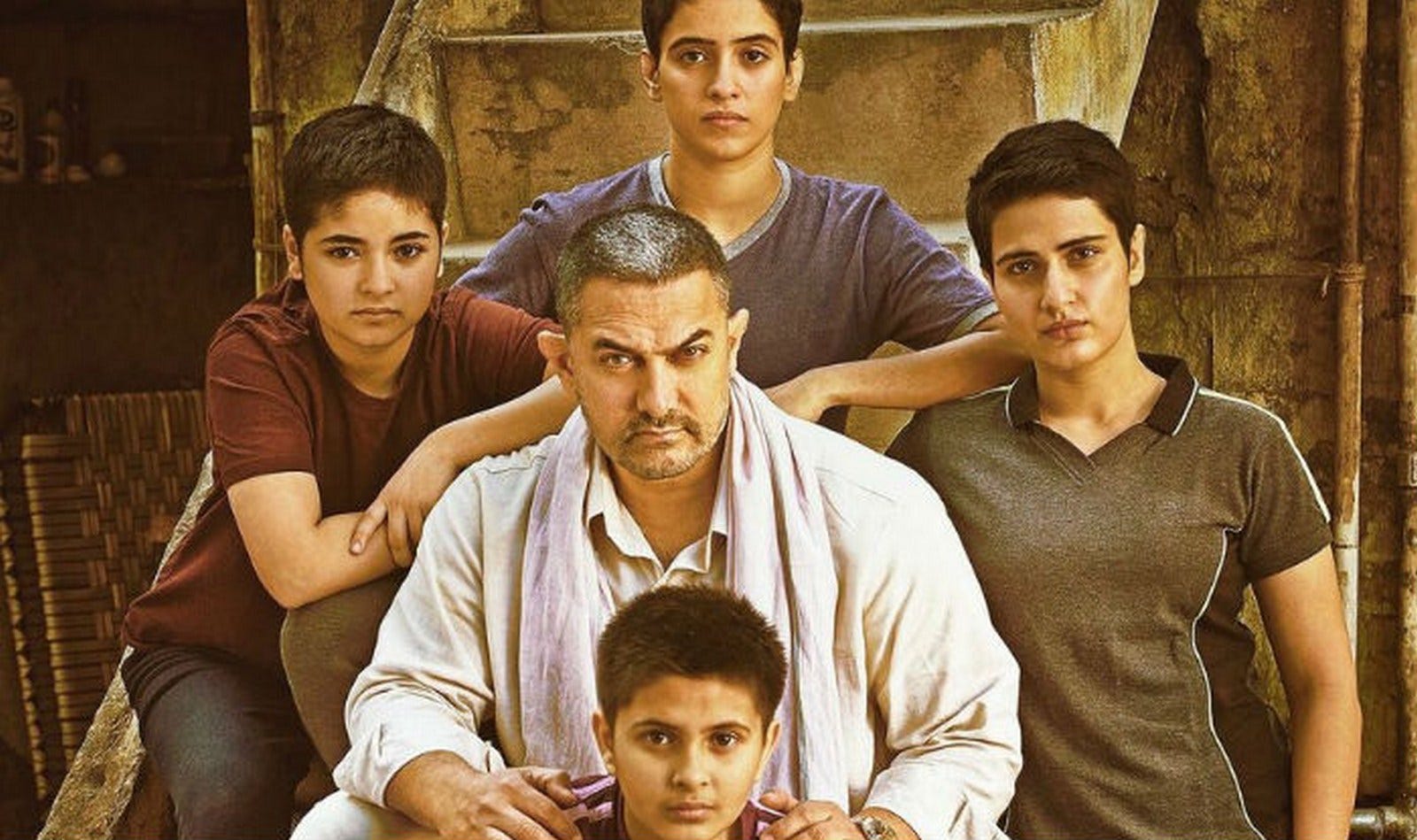
Some movies fade once the hype passes. Dangal isn’t one of them. Even in 2026, people still bring it up when they talk about sports films that actually stick, the kind that make you sit up straighter without feeling like you’re being lectured.
Released in 2016, this Hindi sports drama stars Aamir Khan and pulls from the real Phogat family story. It’s built around wrestling, but it’s really about family, pride, and the cost of chasing a dream. This review covers the story setup (no big match spoilers), performances, direction, music, themes, what works, what doesn’t, and who should watch it today.
What Dangal Is About (No Spoilers) and Why the Story Works
At its core, Dangal is simple: Mahavir Singh Phogat is a former wrestler with a gold-medal dream that didn’t work out. He’s stubborn, proud, and stuck in a small-town world that keeps telling girls to stay in their lane. When life doesn’t give him the son he expected, he makes a sharp turn and decides his daughters will become champions instead.
That setup creates the central tension right away. The father pushes. The daughters resist. The town watches. Meanwhile, wrestling becomes both a tool and a battleground, not just on the mat, but inside the home.
The film works because the conflict feels personal before it feels patriotic. Training scenes aren’t just “sports montage” material. They’re arguments in motion. Every small win costs something, whether it’s comfort, approval, or the freedom to choose an easier life.
It’s also a story about ambition with consequences. Dangal doesn’t pretend that sacrifice is cute. It shows how love can show up as pressure, and how a dream can feel like a gift one day and a burden the next. If you like sports dramas where the family stakes matter as much as the final match, this one still lands.
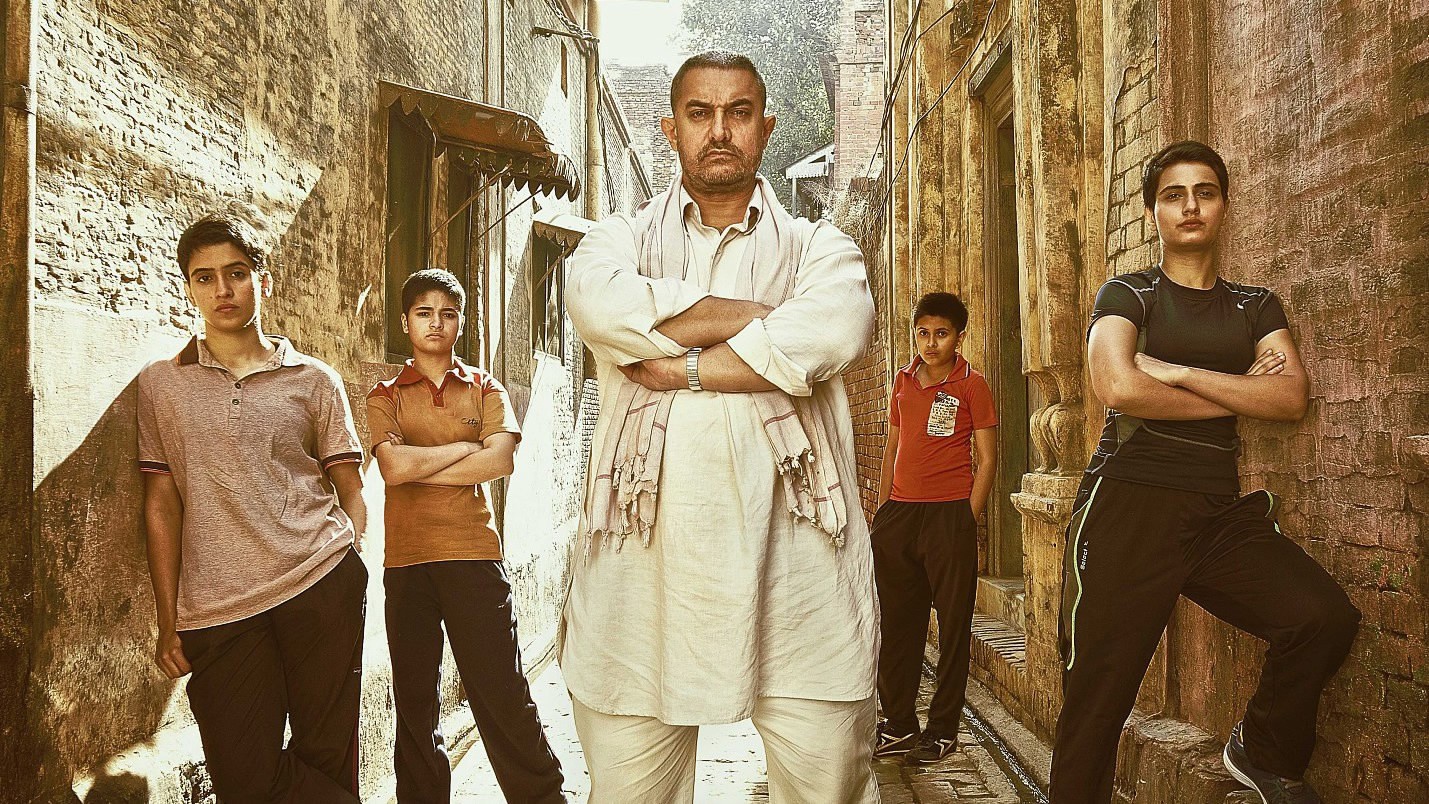
The real-life roots, and what the movie changes for drama
Dangal is inspired by the journey of Geeta and Babita Phogat, two Indian wrestlers who broke through heavy social rules and rose to national-level competition. That real backbone gives the movie its punch, because the goal isn’t imaginary. The struggle isn’t, either.
At the same time, the film is shaped like a mainstream crowd-pleaser. Events get compressed. Some characters feel blended. A few moments are heightened so the emotional beats hit on time. That’s normal for a biopic, and Dangal mostly uses those changes to keep the story clean and focused.
Still, it helps to watch with the right mindset. This isn’t a documentary; it’s a dramatized version meant to make you feel the climb. If you’re curious about where the film may bend or simplify real events, this fact check of the movie’s accuracy gives helpful context without ruining the viewing experience.
Performances, Direction, and Craft: The Stuff That Makes It Feel Real
A big reason Dangal holds up is how grounded it feels. Director Nitesh Tiwari keeps the storytelling direct, and the film doesn’t rush past the “boring” parts. It spends time on practice, fatigue, and the awkwardness of learning something you didn’t ask for. That patience makes the later payoff feel earned.
The wrestling is shot in a way that helps beginners follow along. You don’t need to know the sport to understand what’s at stake in each moment. The camera stays close enough to show struggle, but clear enough that you can track who’s gaining control.
Even small choices help. Costumes look lived-in. Houses feel cramped in a believable way. Public spaces look noisy and judgmental, which fits the story. As a result, the movie pulls you into the world without needing fancy tricks.
Dangal also avoids making every adult wise and supportive. Many side characters behave the way real communities do when someone breaks a norm: they tease, they criticize, and then they quietly switch sides once success shows up. It’s not flattering, but it’s honest.
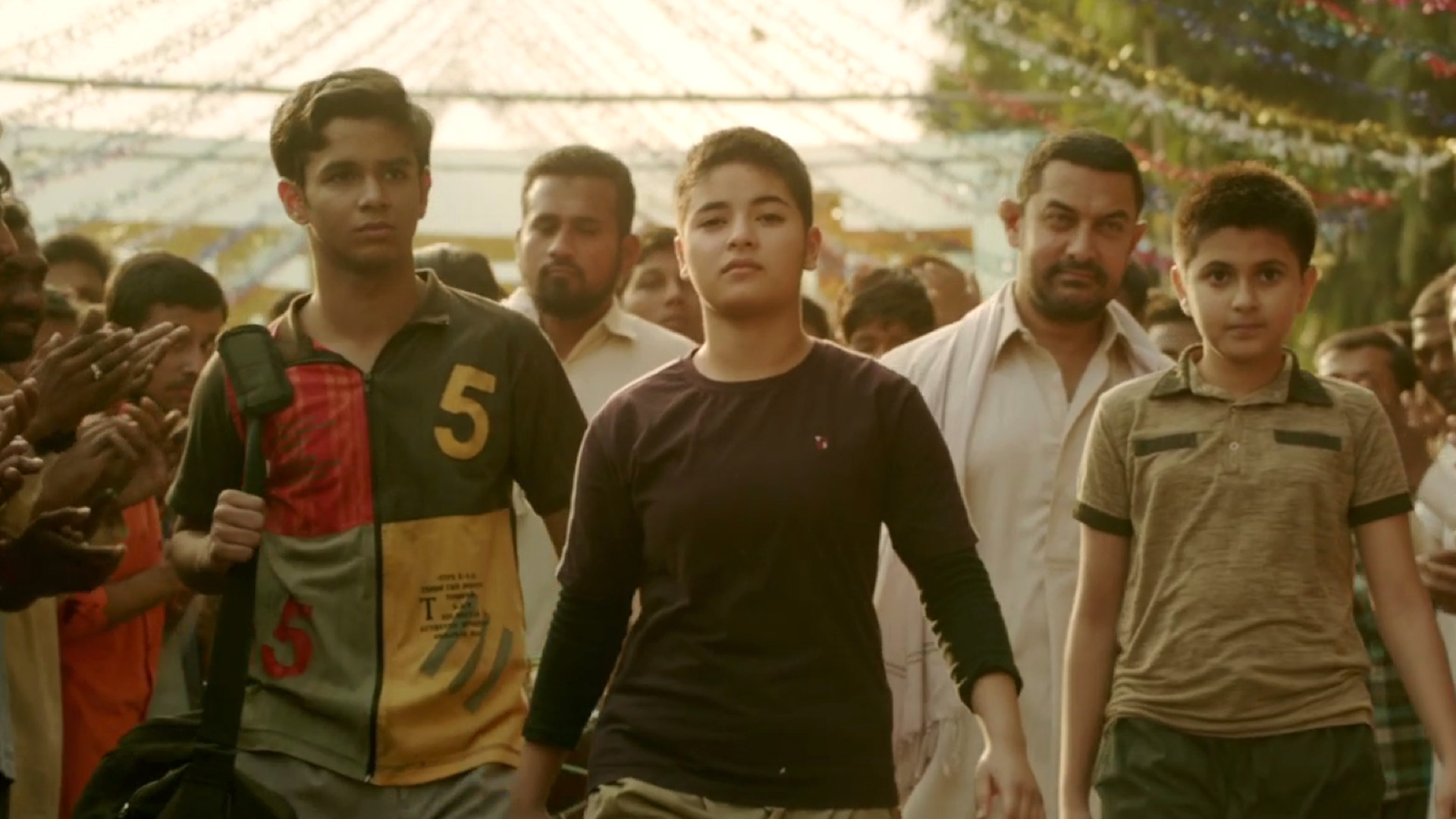
Aamir Khan and the daughters who carry the heart of the film
Aamir Khan plays Mahavir as a man you can admire and dislike in the same scene. That’s the right choice. Mahavir is driven, but he’s also controlling. He loves his daughters, yet he tries to steer their lives with a tight grip. If the character were softer, the story would lose its edge.
What makes the film work, though, is that the daughters aren’t treated like props in their father’s journey. Their growth becomes the spine of the movie. The young versions show fear, embarrassment, and small bursts of anger. Later, as they get older, you see confidence build in layers, not overnight.
The performances from the actresses playing Geeta and Babita (both younger and older) sell that change. They don’t just look trained, they look mentally tougher in a way that reads on their faces. Even quiet moments, like sitting through social pressure or handling a loss, feel lived-in.
The best sports movies don’t only ask, “Can they win?” They also ask, “What did winning cost them?”
That question hangs over Mahavir and his daughters the whole time, and the cast makes it feel real.
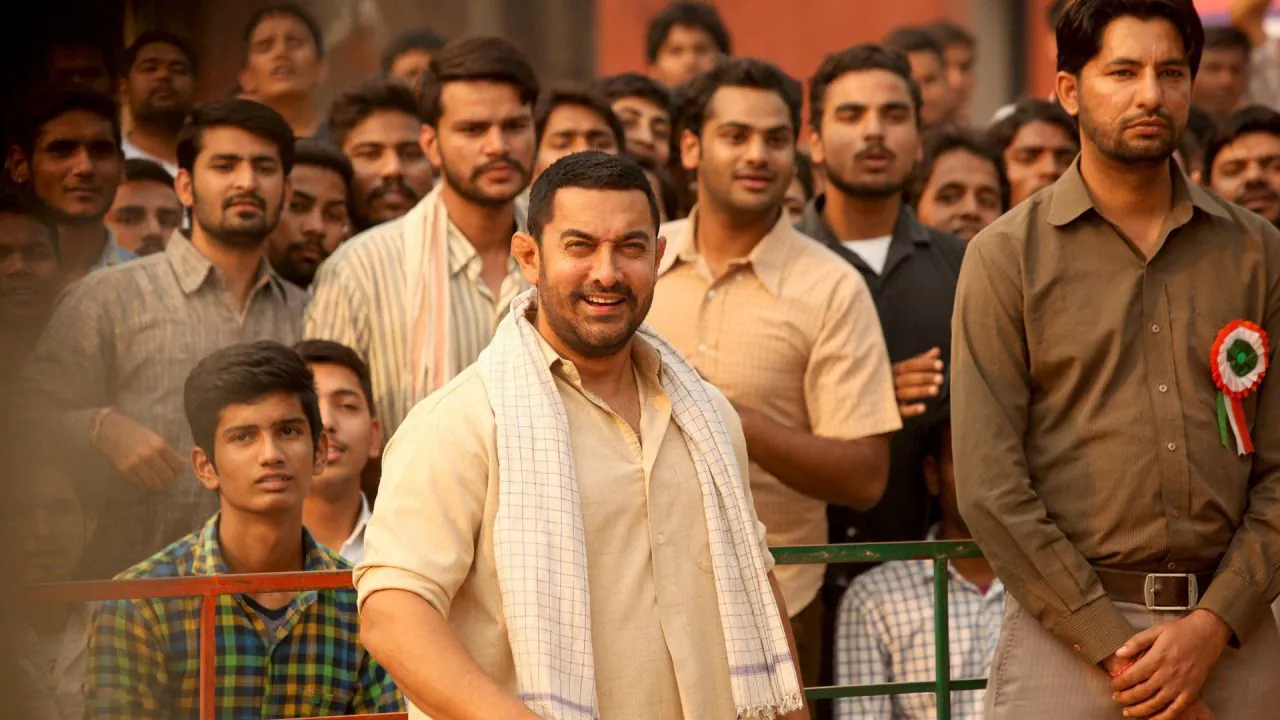
Wrestling scenes, pacing, and the music that drives the emotion
Dangal’s matches have tension because the film treats each bout like a story beat, not just an action break. You can feel when someone’s panicking, adjusting, or trying to bait the opponent. The editing helps you understand momentum shifts without over-explaining.
The pacing is mostly strong, although the runtime is close to three hours, and you will feel it in the middle. A few training and family beats could’ve been trimmed. Still, the film earns much of its length because it shows repetition, and repetition is the point of training. Champions don’t appear after two lessons.
Music plays a supportive role instead of hijacking the movie. Songs like “Haanikaarak Bapu” add humor while still fitting the story, and tracks like “Dhaakad” bring adrenaline without turning the film into a music video. The background score also knows when to step back, which matters during intense match moments.
Just as important, Dangal doesn’t use songs as filler romance breaks. That choice keeps the focus on the family and the sport, which is why the emotional bbondstays intact.
Themes That Spark Debate: Parenting, Pressure, and Women in Sports
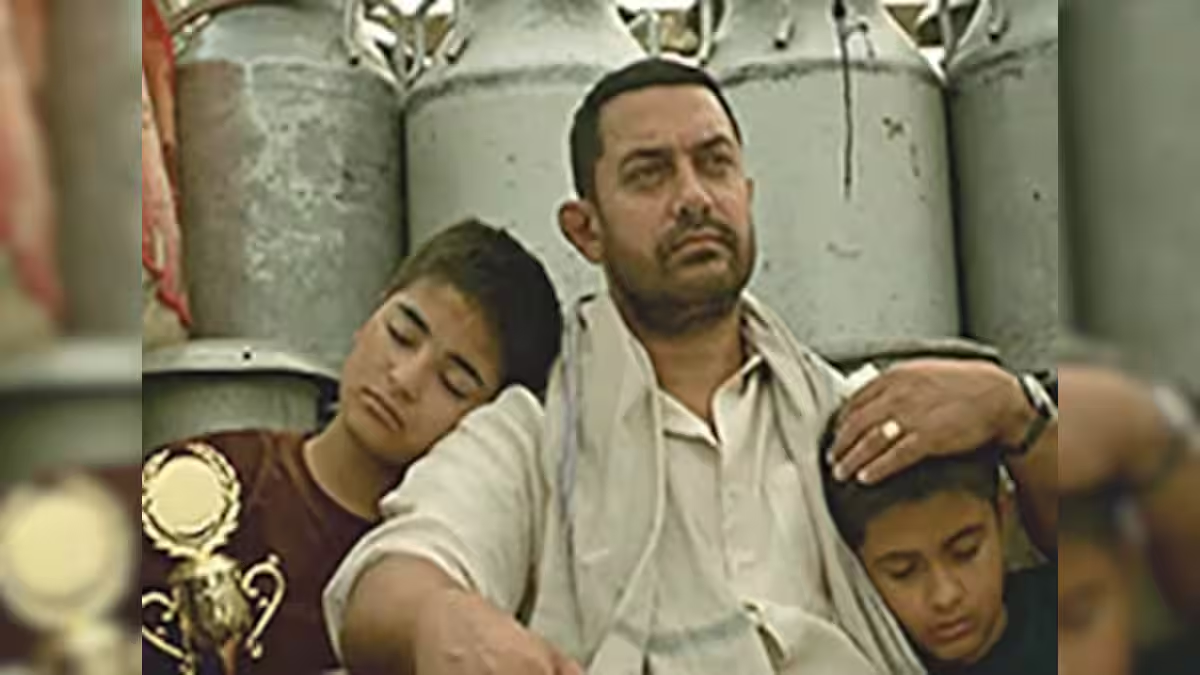
Dangal isn’t only a feel-good story about medals. It’s a movie about power inside a family, and that’s why people still argue about it years later. On one level, it’s uplifting because it shows girls doing something their community thinks they shouldn’t. On another level, it shows a father making choices for his children, even when they fight back.
That mix can be uncomfortable, and it should be. The film doesn’t always stop to reassure you that every method is healthy. Instead, it shows results and lets the viewer wrestle with the messier question: what kind of “support” is still support, and when does it become ownership?
At the same time, Dangal makes one thing clear. Talent can get trapped by tradition. The movie pushes against that trap, and it does it in a way that feels rooted in everyday life, not speeches.
Empowerment done right, and where the movie feels too strict
The empowerment angle works best when it’s shown, not announced. The daughters don’t win respect because the town suddenly becomes progressive. They win it because they earn it, one hard day at a time. Their victories also bring other girls hope, even if the movie shows that hope in small, quiet ways.
Yet the strict parenting can be hard to watch. Mahavir’s methods often leave little room for choice. The film sometimes frames his control as necessary for success, and that’s where some viewers push back. It’s possible to feel inspired by the daughters and still question the father’s approach.
So here’s the clean question the movie leaves behind: where’s the line between discipline and control? Dangal doesn’t hand you a perfect answer, but it does force you to think about it, which is more interesting than a simple “believe in yourself” message.
What the success says about India, and why it traveled worldwide
Dangal didn’t just connect with Indian audiences; it traveled far for a Hindi film. Its worldwide gross reached about ₹2,000 crore, with around ₹387 crore coming from India, plus over $216 million in China (figures commonly cited in box office summaries). For a quick reference on the reported totals and release history, see the [Dangal box office and distribution overview](https://en.wikipedia.org/wiki/Dangal_(2016_film).
Numbers like that don’t happen from patriotism alone. The story works across countries because it’s built on universal pressure points: a parent’s dream, a kid’s identity, and the fear of wasting potential. Add the clear sports tension, and you get a movie that doesn’t require cultural homework.
It also helps that wrestling is visual and easy to grasp. Even if you’ve never watched a real match, you understand dominance, escape, and desperation. The film uses that clarity to keep the stakes readable, which makes the emotional beats land in any language.
Final Verdict: Should You Watch Dangal Today?
Yes, Dangal is still worth your time, especially if you like sports dramas that feel human. In the US, as of February 2026, it’s available to stream on Netflix (including Netflix Standard with Ads). You can also rent or buy it on platforms like YouTube or Google Play, depending on current store listings.
The movie is best for:
- viewers who enjoy inspirational biopics with real emotional weight
- families looking for a film that sparks conversation (not just applause)
- anyone who likes underdog sports stories, but wants more than a final-win glow
Here’s the quick balance sheet.
Pros
- Strong performances, especially from the actresses playing the daughters
- Wrestling scenes that stay clear, tense, and easy to follow
- Themes that stick with you after the credits
Cons
- The runtime is long, and the middle can drag
- The strict parenting approach may not sit right for everyone
Suggested rating: 4.5 out of 5 stars.
If you watch it again today, pay attention to how your feelings shift over time. Do you see Mahavir as more inspiring or more troubling? And which performance hits you hardest now?
Closing thoughts: why Dangal still holds up
Dangal is more than a wrestling movie. It’s a story about family, pressure, and pride, and it still feels alive in 2026 because it refuses to be simple. The film motivates without pretending the process is comfortable. If you want a sports drama with real emotion, Dangal remains an easy recommendation. Share your take after you watch, especially where you land on the parenting question.
Trending Movies:
Couple-Friendly Movie Review Guide for February 2026 Date Nights
